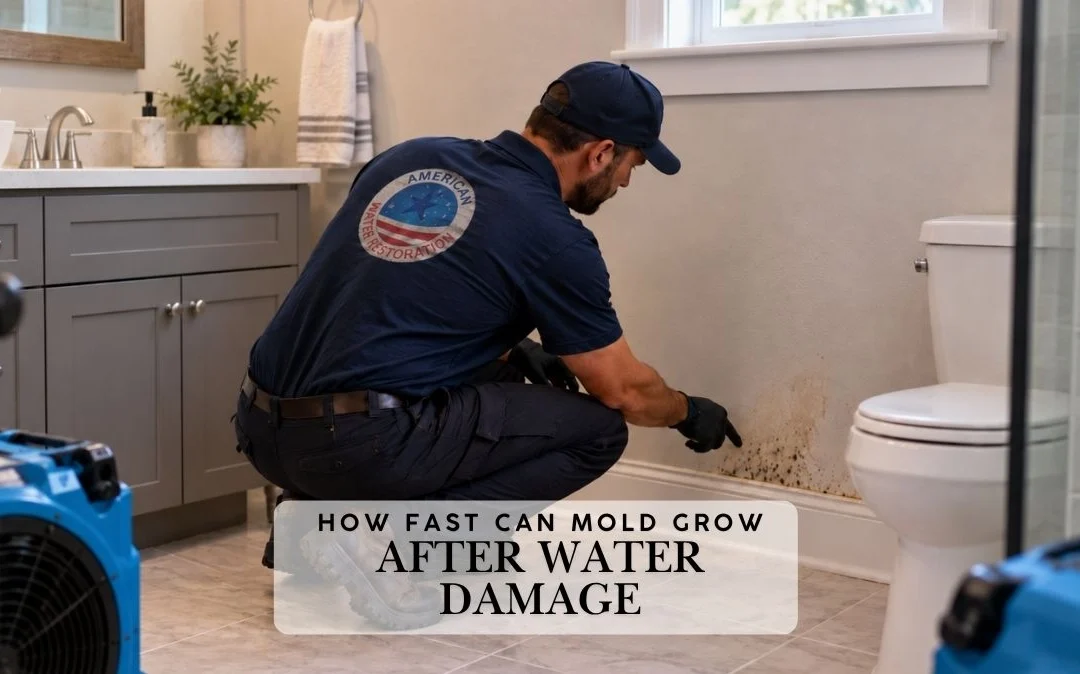
Today we talk about "How Fast Can Mold Grow After Water Damage."
Mold Can Begin Developing Faster Than You Think
After a leak or flood, moisture can remain inside drywall, flooring, cabinets, and insulation even after visible water is gone. In the right conditions, mold can begin developing within 24 to 48 hours. The longer damp materials remain untreated, the greater the chance that mold can spread into areas you cannot easily see.
At American Water Restoration, we encourage you to address moisture as soon as possible. Our team uses moisture-detection equipment to identify wet areas and determine where drying is needed before hidden moisture creates a larger problem.
Why Moisture Creates the Right Conditions for Mold
Mold needs moisture, an organic food source, and suitable temperatures to grow. Materials inside your property, including drywall paper, wood, carpet backing, and insulation, can provide those conditions after water exposure.
Simply wiping up standing water may not be enough. Moisture can travel beneath flooring, behind baseboards, and into wall cavities. Professional Water Damage Restoration focuses on removing water and drying affected materials thoroughly, which helps reduce the conditions that allow mold to develop.
You should also watch for warning signs such as musty odors, discoloration, peeling paint, warped materials, or recurring dampness. These symptoms can indicate hidden moisture.
What Happens If Water Damage Is Left Untreated?
When wet materials stay damp for several days, mold may continue spreading beyond the original area of water damage. Porous materials can become harder to restore, odors may become stronger, and repairs may become more extensive.
If mold is already present, professional Mold Removal may be necessary to contain the affected area, remove materials that cannot be safely restored, and clean remaining surfaces. We also look for the moisture source because removing visible mold without correcting the underlying water problem can allow it to return.
At American Water Restoration, our goal is to help you address both the damage you can see and moisture that may be hidden.
Water From Other Property Damage Can Also Lead to Mold
Water problems are not limited to burst pipes or appliance leaks. Firefighting efforts can leave moisture after a fire. During Fire Damage Restoration, drying and moisture monitoring are important parts of protecting materials that were not directly damaged by flames.
Roof leaks, overflowing fixtures, sewage backups, and storm intrusion can create similar concerns. Regardless of the source, removing excess water and drying the structure quickly can help limit secondary damage.
What Should You Do After Discovering Water Damage?
If you discover water damage, act quickly. Stop the source when it is safe to do so, move valuables away from the affected area, document visible damage, and contact a professional restoration company.
Our team can inspect the affected areas, remove standing water, monitor moisture levels, and use professional drying equipment to help prevent the problem from becoming more extensive. The sooner your property is properly dried, the better your chances of limiting mold growth and avoiding unnecessary repairs.